The Current State of Student Mental Health
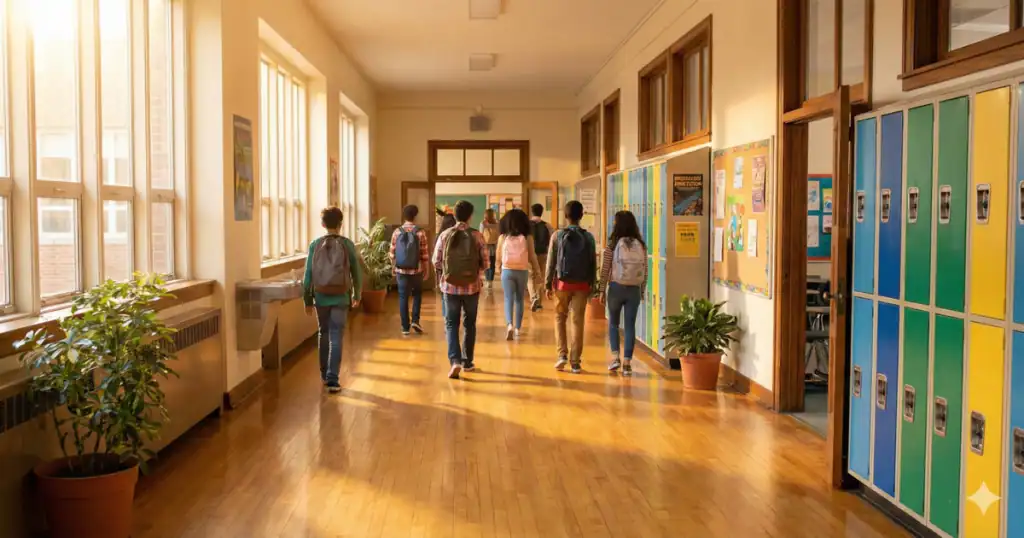
Youth mental health has been in decline nationally for over a decade, and the pandemic accelerated the trend. The CDC’s Youth Risk Behavior Survey data shows persistent increases in sadness, hopelessness, and suicidal ideation among high school students. In 2023, the U.S. Surgeon General issued an advisory calling youth mental health “the defining public health crisis of our time.” Florida is not exempt — the state has seen rising rates of Baker Act examinations on minors, and Sarasota County schools are navigating the same pressures as districts nationwide: more students in distress, limited school-based resources, and families unsure where to turn.
The good news is that Sarasota County has resources — both within the school system and in the broader community. Understanding what’s available, knowing the warning signs, and knowing when school-based support is not enough puts you in the best position to advocate for your child.
What Sarasota County Schools Offer
Most Sarasota County schools have school counselors — professionals with master’s degrees in school counseling who provide academic advising, social-emotional support, and short-term counseling. Some schools also have partnerships with community mental health agencies that place clinicians on campus. It is important to understand that school counselors are not school psychologists — school psychologists hold specialist or doctoral degrees and focus primarily on evaluation and assessment rather than ongoing counseling. Most schools do not have a full-time school psychologist on site.
Sarasota County Schools uses a Multi-Tiered System of Supports (MTSS) framework. Tier 1 provides universal social-emotional learning for all students. Tier 2 provides targeted small-group interventions for students showing early signs of difficulty. Tier 3 provides intensive individual support for students with significant needs. If your child is receiving Tier 2 or Tier 3 interventions and is not improving, that is a signal to explore whether a more comprehensive evaluation or outside services are needed.
Section 504 plans and Individualized Education Programs (IEPs) are available for students whose mental health conditions substantially affect their ability to learn. A 504 plan provides accommodations within the general education setting — things like extended time on tests, flexible seating, breaks for anxiety management, or modified assignments. An IEP provides more intensive support, including specialized instruction. Both require documentation, and a comprehensive psychological evaluation strengthens the case significantly.
Florida’s Baker Act allows for involuntary psychiatric examination of anyone — including minors — who may be a danger to themselves or others. Schools can initiate a Baker Act examination. As a parent, you should know: you have the right to be notified immediately, you have the right to be present during the process, and the examination must be conducted at a designated receiving facility. Understanding this law before a crisis arises is far better than learning about it in the moment.
Signs Your Child May Need Support Beyond School
School-based services are an important first line of support, but they have limits. Here are signs that your child may benefit from outside professional help.
Academic decline lasting more than one grading period. A single bad report card may reflect a tough unit or a social disruption. Persistent decline over weeks or months — especially in a child who previously performed well — warrants investigation.
Social withdrawal from friends and activities they used to enjoy. Pulling away from peers, quitting sports or clubs, or preferring isolation over previously enjoyed activities can indicate depression, anxiety, or another underlying concern.
Physical complaints with no medical cause. Chronic headaches, stomachaches, fatigue, or other somatic symptoms that your pediatrician cannot explain medically are often the body’s way of expressing emotional distress — particularly in younger children who lack the vocabulary to articulate what they are feeling.
Changes in sleep, appetite, or energy level. Sleeping too much or too little, significant changes in eating patterns, and persistent low energy or agitation can all indicate clinical anxiety or depression.
Expressions of hopelessness. Statements like “nothing matters,” “I wish I wasn’t here,” or “what’s the point” should always be taken seriously, even when delivered casually. These are not phases to wait out.
School avoidance or refusal. A child who is consistently trying to stay home, complaining of illness on school mornings, or experiencing extreme distress about attending school may be dealing with anxiety, bullying, learning difficulties, or social challenges that require professional assessment.
How Outside Psychological Services Complement School
Outside psychological services do not replace school resources — they add depth and specialization that schools cannot provide within their structure.
Comprehensive psychological testing is one of the most significant differences. Schools can evaluate students, and they are required to do so at no cost when requested. However, school evaluations are often narrower in scope and focused on educational eligibility rather than comprehensive diagnosis. A private evaluation conducted by a doctoral-level psychologist (CPT codes 96130–96139) provides a full cognitive, academic, behavioral, and emotional profile that informs not just school accommodations but treatment planning across all settings. This is particularly important for complex presentations like ADHD, autism spectrum disorder, learning disabilities, and giftedness.
Individual therapy with a doctoral-level psychologist provides ongoing treatment for issues that go beyond what school counselors handle — clinical anxiety disorders, depression, trauma, behavioral disorders, and family-related stress. Weekly therapy sessions in a private setting allow for deeper work than brief check-ins at school.
Parent coaching helps you support your child’s mental health at home — managing homework battles, reducing power struggles, building communication, and understanding your child’s emotional needs within the family system.
Family therapy addresses the reality that a child’s mental health does not exist in isolation. When one family member is struggling, the whole family is affected. Family sessions help everyone adjust and support each other more effectively.
Coordination between your child’s psychologist and school team — with your written consent — can dramatically improve outcomes. A psychologist who understands your child’s full profile can attend school meetings, help develop accommodation plans, and provide recommendations that school staff can implement. This coordination bridges the gap between clinical understanding and classroom practice.
How to Advocate for Your Child’s Mental Health at School
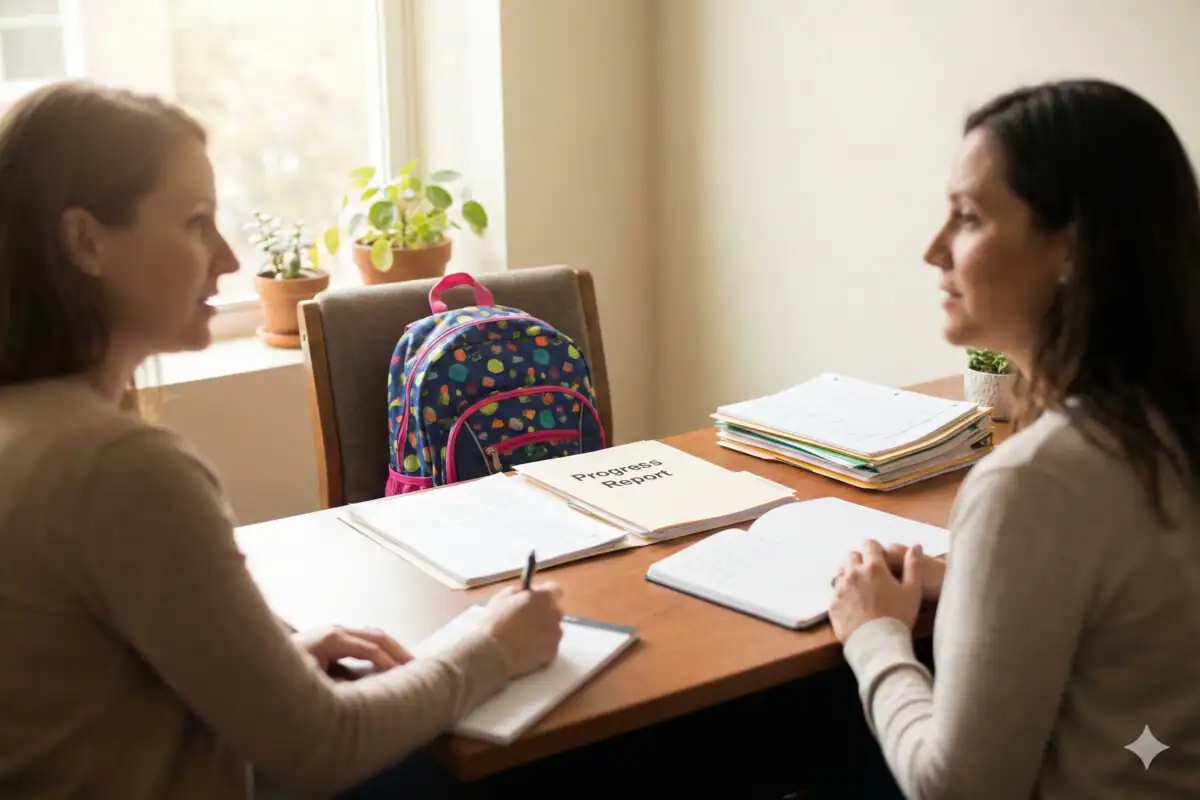
Start with the school counselor. Request a meeting to share your concerns. Bring specific examples — dates, behaviors, academic changes — rather than general statements. The more concrete you are, the easier it is for the school to respond with appropriate support.
Put evaluation requests in writing. If you believe your child needs a formal evaluation for a 504 plan or special education services, submit a written request to the school principal or the exceptional student education (ESE) department. Federal law requires the district to respond within specific timelines once a written request is received. Keep a copy of everything.
Know what to bring to a school meeting. If you have a private psychological evaluation, bring the report. Bring report cards, work samples, communication from teachers, and any documentation from outside providers. The more complete the picture, the stronger the case for appropriate services.
Understand your right to an independent educational evaluation (IEE). If you disagree with the school’s evaluation findings, you can request an IEE at the district’s expense. The district must either fund the evaluation or file for a due process hearing to demonstrate that their evaluation was appropriate.
Know IDEA and Section 504. Under the Individuals with Disabilities Education Act (IDEA), students with disabilities that require specialized instruction are entitled to an IEP. Under Section 504 of the Rehabilitation Act, students with disabilities that substantially limit a major life activity (including learning) are entitled to accommodations. Mental health conditions — including anxiety, depression, ADHD, and autism — can qualify under both laws. Your child has legal protections, and you have the right to advocate for them.
For a broader overview of mental health services available in the county beyond schools, see our Sarasota County Mental Health Resources Guide.
Our psychologists at our offices in Sarasota and Venice work closely with Sarasota County families navigating school-based mental health concerns. Founded by Dr. Davenport, our team of doctoral-level psychologists provides comprehensive evaluation, ongoing treatment, and school coordination to ensure your child receives the support they need both in and outside the classroom.
Frequently Asked Questions
Can the school require my child to see a therapist?
No. Schools can recommend mental health services, but they cannot require a student to participate in therapy. However, if your child is receiving special education services, the IEP team may recommend counseling as a related service — and in that case, the school would provide or fund the counseling. You always have the right to consent to or refuse services.
Will a psychological evaluation affect my child’s school record?
A private psychological evaluation is a medical record and is not automatically part of your child’s school file. However, if you share the report with the school to support a 504 or IEP request, it becomes part of their educational record. Educational records are protected under FERPA (Family Educational Rights and Privacy Act) and cannot be shared without your consent.
How do 504 plans and IEPs differ for mental health accommodations?
A 504 plan provides accommodations — changes to the learning environment or how material is presented — within the general education setting. Examples include extended time, flexible deadlines, and access to a quiet testing space. An IEP provides specialized instruction and may include services like school-based counseling, social skills training, or a modified curriculum. An IEP requires a formal eligibility determination under one of IDEA’s disability categories. Both can address mental health needs; the right choice depends on the severity and nature of your child’s challenges.
At what point should I seek a private psychologist instead of relying on school services?
Consider outside services when school interventions have been in place for a reasonable period (typically six to eight weeks at Tier 2 or Tier 3) without meaningful improvement, when you need a comprehensive diagnostic evaluation that goes beyond what the school provides, when your child’s difficulties extend significantly beyond the school setting, or when you want ongoing therapy or evaluation with a doctoral-level psychologist who can coordinate care across all areas of your child’s life.
References
- Centers for Disease Control and Prevention. (2023). Youth Risk Behavior Survey data summary and trends report. https://www.cdc.gov/yrbs/
- Office of the Surgeon General. (2023). Protecting youth mental health: The U.S. Surgeon General’s advisory. https://www.hhs.gov/surgeongeneral/priorities/youth-mental-health
- National Institute of Mental Health. (2024). Children and mental health. https://www.nimh.nih.gov/health/topics/child-and-adolescent-mental-health
- Florida Department of Education. (2024). Mental health assistance allocation. https://www.fldoe.org/safe-schools/mental-health-assistance.stml
- Florida Legislature. (2024). The Baker Act: Florida Mental Health Act, Chapter 394, Part I. Florida Statutes Chapter 394
- Individuals with Disabilities Education Act, 20 U.S.C. § 1400 (2004). https://sites.ed.gov/idea/
- U.S. Department of Education, Office for Civil Rights. (2020). Protecting students with disabilities. https://www2.ed.gov/about/offices/list/ocr/504faq.html
- Sarasota County Schools. (2024). Student services. https://www.sarasotacountyschools.net
- National Association of School Psychologists. (2021). Comprehensive school-based mental and behavioral health services. https://www.nasponline.org
- American Psychological Association. (2023). Children’s mental health. https://www.apa.org/topics/children
Get Professional Help from Licensed Psychologists
Our doctoral-level psychologists in Sarasota and Venice can help with your mental health needs.
Call (941) 702-2457 to schedule a consultation.