
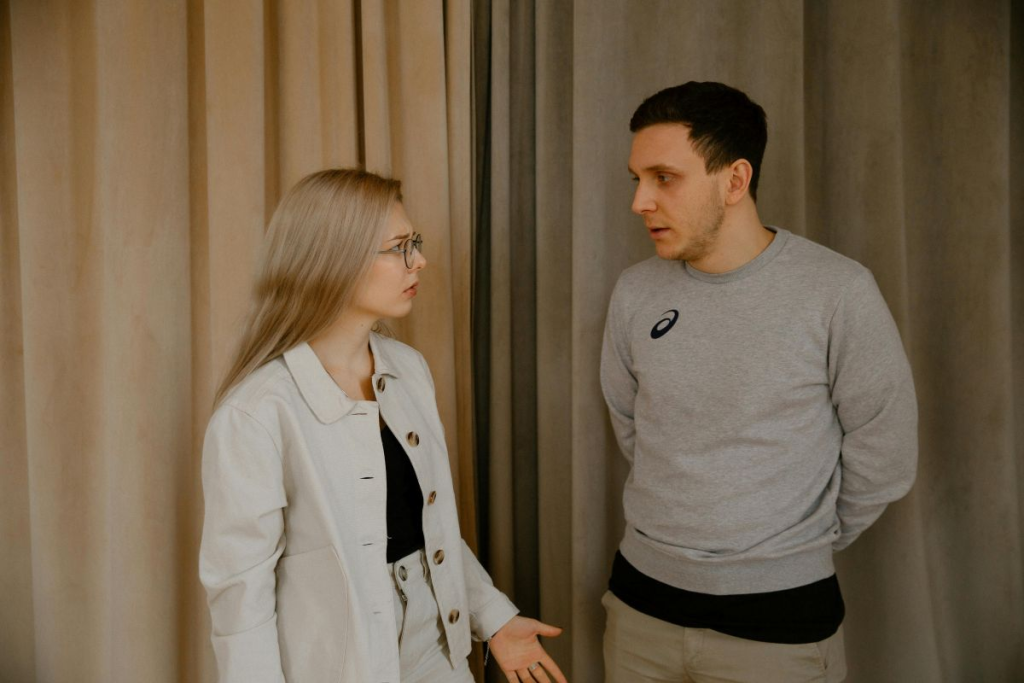
Most couples who seek help for their relationship describe the same frustration: they cannot seem to communicate without the conversation escalating into conflict. What many do not realize is that research has identified specific communication patterns — not the topics you argue about, but the way you argue — that can predict the trajectory of a relationship with remarkable accuracy.
Dr. John Gottman, a psychologist at the University of Washington, spent over four decades studying what makes relationships succeed or fail. His research identified four destructive communication patterns he called “The Four Horsemen of the Apocalypse,” and his longitudinal studies demonstrated that these patterns could predict relationship dissolution with over 93% accuracy (Gottman, 1999). The encouraging news is that these patterns are identifiable, and more importantly, they are changeable. This is not about assigning blame — it is about recognizing what is happening and building the skills to do it differently.
The Research Behind the Prediction
Gottman’s research methodology was groundbreaking. At his “Love Lab” at the University of Washington, he observed couples during conflict conversations while simultaneously measuring physiological responses — heart rate, skin conductance, blood flow velocity, and stress hormones. He then tracked these couples over years, sometimes decades, to determine which relationships survived and which ended in separation or divorce (Gottman & Levenson, 2000).
What emerged from this longitudinal data was a clear finding: the content of couples’ disagreements mattered far less than the process. Couples who fought about finances, parenting, or household responsibilities were not more likely to divorce than those who rarely argued about these topics. Instead, it was how couples engaged during conflict that determined the relationship’s future. The presence of specific destructive communication patterns — even in small doses — predicted negative outcomes with striking consistency.
Physiological data added another layer of insight. When certain patterns were present, partners’ heart rates climbed above 100 beats per minute, cortisol levels spiked, and the body entered a state Gottman described as “diffuse physiological arousal,” or flooding. In this state, productive conversation becomes neurologically impossible — the brain shifts into a fight-or-flight mode that prioritizes self-protection over connection (Levenson & Gottman, 1983).
Horseman 1: Criticism
The first of Gottman’s Four Horsemen is criticism, and it is important to distinguish it from a complaint. A complaint addresses a specific behavior: “I felt hurt when you did not call to let me know you would be late.” Criticism, by contrast, attacks the other person’s character: “You never think about anyone but yourself. You are so selfish.” The difference is subtle but significant — complaints focus on actions, while criticism implies that something is fundamentally wrong with who your partner is.
Criticism becomes destructive because it almost always triggers defensiveness in the receiving partner, which creates an escalating cycle. When one partner feels their character is being attacked rather than a specific behavior being addressed, they are far less likely to respond with openness or empathy. Instead, they protect themselves, and the original concern goes unresolved.
The antidote to criticism is what Gottman calls a “gentle startup” — expressing needs using “I” statements that focus on feelings and specific behaviors rather than character judgments. For example, a couple might reframe the criticism above as: “I feel worried when I do not hear from you. Could you text me if you are running late?” This small shift in language changes the entire trajectory of the conversation, opening a door for connection rather than slamming it shut.
Horseman 2: Contempt
Of all four horsemen, contempt is the single greatest predictor of divorce in Gottman’s research (Gottman, 1994). Contempt communicates from a position of moral superiority — it says, “I am better than you.” It manifests as sarcasm, eye-rolling, mockery, name-calling, hostile humor, and sneering. While criticism attacks what your partner does, contempt attacks who they are with a layer of disgust and disrespect.
The physiological impact of contempt is profound. When a person is on the receiving end of contemptuous communication, their body responds with a surge of stress hormones. Heart rate elevates, cortisol floods the system, and the immune system is actually suppressed — Gottman’s research found that couples with high levels of contempt in their interactions had measurably higher rates of infectious illness over the following years. Contempt also erodes what researchers call “positive sentiment override,” the baseline assumption in healthy relationships that your partner’s intentions are good. Once positive sentiment override is lost, even neutral actions are interpreted negatively.
The antidote to contempt is building a culture of appreciation and respect within the relationship. Gottman’s research on stable, happy couples revealed a consistent ratio: at least five positive interactions for every negative one. Couples who maintained this 5:1 ratio — even during conflict — demonstrated dramatically different outcomes than those whose ratio fell below that threshold (Gottman & Silver, 2015). Building appreciation is a daily practice, not a one-time intervention.
Horseman 3: Defensiveness
Defensiveness is a natural response to feeling attacked, but when it becomes a habitual pattern in a relationship, it blocks any possibility of resolution. Defensiveness takes several forms: righteous indignation (“I did nothing wrong — this is entirely your fault”), cross-complaining (“Well, what about the time you…”), and victim-playing (“Why are you always picking on me? I can never do anything right”).
What makes defensiveness so destructive is that it communicates a refusal to take responsibility for even a small part of the problem. When both partners are defending rather than listening, the conversation becomes two simultaneous monologues rather than a dialogue. The original issue remains unaddressed, resentment builds, and the cycle repeats with increasing intensity.
The antidote to defensiveness is accepting responsibility — even for a small part of the problem. This does not mean taking blame for everything or agreeing that you are wrong. It means acknowledging your partner’s perspective and finding the kernel of truth in their complaint. A response like “You are right that I could have handled that differently” de-escalates conflict more effectively than any defensive strategy. Research on repair attempts — the small gestures couples make to slow down negative cycles — shows that the ability to accept responsibility is one of the strongest predictors of relationship resilience (Gottman, 2011).
Horseman 4: Stonewalling
Stonewalling is the fourth and final horseman. It occurs when one partner withdraws from the interaction entirely — turning away, shutting down, becoming unresponsive, or physically leaving the room without explanation. The stonewaller may appear disengaged or indifferent, but research reveals that the opposite is usually true: their nervous system is overwhelmed.
Gottman’s physiological data showed that when partners stonewall, their heart rate is typically above 100 beats per minute. At this level of physiological arousal, the prefrontal cortex — the part of the brain responsible for rational thought, empathy, and problem-solving — goes offline. The body is in survival mode, and productive conversation is neurologically impossible. Stonewalling is, in many cases, a protective response to flooding rather than an act of intentional cruelty.
Research has shown that men tend to stonewall more frequently than women, though both partners engage in it. This gender difference may be partly physiological — men tend to become flooded more quickly during conflict and take longer to return to baseline (Gottman & Levenson, 2000). The antidote to stonewalling is structured self-soothing: taking a mutually agreed-upon break of at least 20 minutes to allow the nervous system to calm down, with a clear commitment to return and resume the conversation. The break must include an activity that genuinely reduces physiological arousal — a walk, deep breathing, or listening to music — rather than rehearsing arguments.
When Communication Patterns Become Entrenched
The Four Horsemen rarely appear in isolation. More often, they cascade — criticism triggers defensiveness, which escalates to contempt, which leads to stonewalling. Over time, this cascade becomes the default mode of interaction, and the relationship enters what Gottman describes as “negative sentiment override.” In this state, the baseline assumption shifts from “my partner is well-intentioned” to “my partner is selfish or hostile.” Even neutral or positive actions are filtered through this negative lens, making recovery increasingly difficult without intervention.
The final stage of this process is emotional disengagement — what Gottman calls “distance and isolation.” Partners stop turning toward each other for connection, stop sharing their inner worlds, and begin living parallel rather than interconnected lives. At this point, the relationship may appear calm on the surface, but the emotional foundation has eroded. This is why early intervention matters so profoundly. The patterns are significantly easier to change before they calcify into the relationship’s fundamental structure.
If you recognize these patterns in your own relationship, evidence-based couples counseling can help you identify the cycle and build the skills to replace it with healthier alternatives.
How Evidence-Based Couples Therapy Addresses These Patterns
Gottman Method Couples Therapy is designed specifically to target the Four Horsemen and replace them with their antidotes. In structured sessions, a psychologist helps couples identify their specific negative patterns, understand the emotions driving those patterns, and practice new skills in real time. The therapist serves as a guide and coach, intervening in the moment when destructive patterns emerge and redirecting the conversation toward more constructive alternatives.
Emotionally Focused Therapy (EFT), developed by Dr. Sue Johnson, takes a complementary approach by focusing on the attachment injuries that often underlie the Four Horsemen. When partners feel securely attached — when they trust that the other person will be there for them — they are far less likely to resort to criticism, contempt, defensiveness, or stonewalling. EFT helps couples identify the attachment needs beneath their conflict patterns and learn to respond to each other in ways that build rather than erode security (Johnson, 2008).
Whether you are dealing with ongoing relationship challenges or simply want to strengthen your communication before problems escalate, working with a psychologist who specializes in couples work provides the structure, expertise, and accountability that most couples cannot achieve on their own. Our doctoral-level psychologists at both our Sarasota office and Venice office are trained in evidence-based approaches to couples therapy, bringing research-backed methods to every session.
Explore our full range of psychological services to learn how we can help.
Frequently Asked Questions
Can a relationship recover after years of contempt?
Research suggests that recovery is possible when both partners commit to changing patterns. The key factor is genuine willingness from both people to replace contempt with appreciation and respect. Evidence-based couples therapy can guide this process by helping partners rebuild the culture of fondness and admiration that contempt has eroded. The longer the patterns have been in place, the more intensive the work required — but meaningful change remains achievable.
What if only one partner recognizes the destructive patterns?
Individual therapy can help you understand your own role in the communication cycle and develop strategies for inviting change. Many couples begin the process with one motivated partner who learns to respond differently, which often shifts the dynamic enough that the other partner becomes willing to engage. It is also worth noting that your own communication changes — even unilateral ones — can meaningfully alter the pattern.
How long does it take to change communication patterns?
Most couples begin noticing meaningful shifts within 8 to 12 sessions of structured couples therapy, though deeply entrenched patterns may require longer. The goal is not perfection but building new habits that gradually replace the old ones. Over time, the healthier patterns become automatic, and the couple develops the resilience to catch and correct negative cycles before they escalate.
Are the Four Horsemen always present before divorce?
Not always, but Gottman’s research found them to be the most reliable predictors. Some relationships end due to other factors such as incompatible life goals, active addiction, or infidelity — though these issues often coincide with Horsemen patterns. The absence of the Four Horsemen does not guarantee a happy relationship, but their presence is a strong warning signal that the relationship is at risk.
References
Baucom, D. H., Snyder, D. K., & Gordon, K. C. (2015). Couple therapy outcome research. Annual Review of Clinical Psychology, 11, 375–399.
Christensen, A., Atkins, D. C., Berns, S., Wheeler, J., Baucom, D. H., & Simpson, L. E. (2004). Traditional versus integrative behavioral couple therapy. Journal of Consulting and Clinical Psychology, 72(2), 176–191.
Gottman, J. M. (1994). What predicts divorce? The relationship between marital processes and marital outcomes. Lawrence Erlbaum Associates.
Gottman, J. M. (1999). The marriage clinic: A scientifically-based marital therapy. W. W. Norton & Company.
Gottman, J. M. (2011). The science of trust: Emotional attunement for couples. W. W. Norton & Company.
Gottman, J. M., & Levenson, R. W. (2000). The timing of divorce: Predicting when a couple will divorce over a 14-year period. Journal of Marriage and Family, 62(3), 737–745. https://doi.org/10.1111/j.1741-3737.2000.00737.x
Gottman, J. M., & Silver, N. (2015). The seven principles for making marriage work (Rev. ed.). Harmony Books.
Hawkins, A. J., Blanchard, V. L., Baldwin, S. A., & Fawcett, E. B. (2008). Does marriage and relationship education work? A meta-analytic study. Journal of Consulting and Clinical Psychology, 76(5), 723–734.
Johnson, S. M. (2008). Hold me tight: Seven conversations for a lifetime of love. Little, Brown Spark.
Levenson, R. W., & Gottman, J. M. (1983). Marital interaction: Physiological linkage and affective exchange. Journal of Personality and Social Psychology, 45(3), 587–597. https://doi.org/10.1037/0022-3514.45.3.587
American Psychological Association. (n.d.). Evidence-based relationship interventions. https://www.apa.org/topics/marriage-relationships
The Gottman Institute. (n.d.). The Four Horsemen: Criticism, contempt, defensiveness, and stonewalling. https://www.gottman.com/blog/the-four-horsemen-recognizing-criticism-contempt-defensiveness-and-stonewalling/
The Gottman Institute. (n.d.). Research on physiological flooding during marital conflict. https://www.gottman.com/blog/making-sure-emotional-flooding-doesnt-capsize-your-relationship/
National Institute of Mental Health. (n.d.). Relationship distress and mental health. https://www.nimh.nih.gov/
Get Professional Help from Licensed Psychologists
Our doctoral-level psychologists in Sarasota and Venice can help with your mental health needs.
Call (941) 702-2457 to schedule a consultation.