
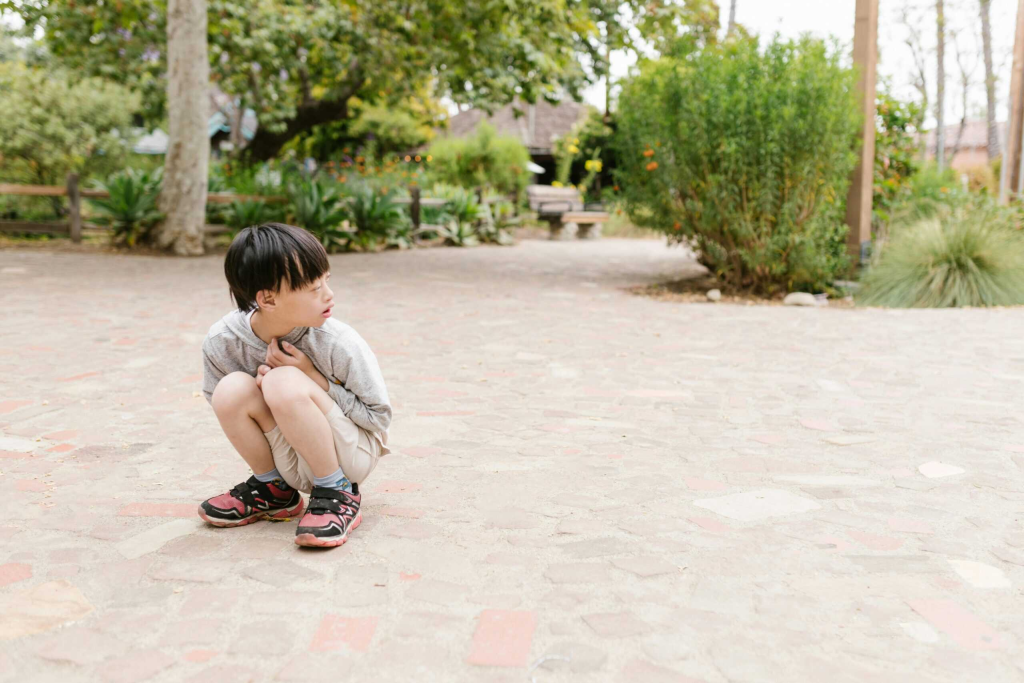
Summer camp represents one of childhood’s great adventures — new friends, new skills, new environments, and new experiences that build independence and resilience. But for many Sarasota children, the weeks leading up to camp are marked not by excitement but by anxiety. The prospect of sleeping away from home, navigating unfamiliar social groups, adapting to a new routine, and being separated from parents and familiar comforts can trigger intense worry that goes well beyond normal pre-camp nerves. Understanding the difference between typical anticipatory anxiety and a clinical concern — and knowing how to support your child through either — can determine whether the camp experience becomes a source of growth or a source of distress.
Why Summer Camp Triggers Anxiety in Kids
Camp anxiety draws from several developmental sources that vary by age. Younger children ages five through eight are most likely to experience separation anxiety, which the American Psychological Association identifies as a normal part of development that typically peaks between ages six and eight. At this age, the child’s primary concern is being away from their attachment figures and the fear that something bad will happen while they are separated. Tweens ages nine through twelve are more likely to experience social anxiety — the worry about fitting in, making friends, being judged by peers, or being embarrassed in front of others. Teens attending camp or summer programs face a combination of social concerns and identity-related stress, particularly around activities where they might be assessed or compared to others. Rapee and colleagues’ (2010) research on anxiety prevention demonstrates that the way parents respond to a child’s anxiety during these transitional moments significantly influences whether the anxiety escalates or resolves.
Preparing Your Child Before Camp
Gradual exposure is the gold standard approach for managing anticipatory anxiety. Rather than expecting your child to go from zero to overnight camp in one step, build a ladder of increasingly challenging experiences. This might begin with afternoon activities at the camp facility, progress to day camp programs, then to a short overnight at a friend’s house, and finally to the camp experience itself. Kendall’s Coping Cat program provides a research-validated framework for graduated exposure with anxious children that our psychologists can adapt for camp preparation.
Role-playing social scenarios with your child normalizes the uncertainty of new situations and provides a script they can fall back on. Practicing how to introduce themselves, how to join a group activity, and how to ask for help reduces the novelty of these situations and increases the child’s sense of competence. Creating comfort items that the child can take to camp — a family photo, a familiar blanket, a written note from a parent — provides a tangible connection to home. Mindfulness techniques adapted for children, such as simple breathing exercises, body scans, and grounding activities, give the child tools they can use independently when anxiety surfaces at camp. The Anxiety and Depression Association of America recommends talking about anxiety openly and normalizing the feeling rather than trying to eliminate it.
Supporting an Anxious Child During Camp
Communication plans require careful calibration. Too much contact can reinforce the child’s belief that they cannot cope without their parent, while too little can leave them feeling abandoned. Work with the camp to establish a communication schedule that provides reassurance without enabling avoidance. Sharing relevant information about your child’s anxiety with camp counselors — without labeling or pathologizing the child — helps staff provide appropriate support. The decision about whether to bring a child home early should be made thoughtfully, considering whether the distress is escalating or gradually resolving. Beidel, Turner, and Morris’s (2000) research on social anxiety in children emphasizes that premature removal from anxiety-provoking situations reinforces avoidance and makes future attempts more difficult, while successful coping experiences build genuine confidence.
Understanding Camp Anxiety by Setting
Not all camp experiences carry the same anxiety profile, and understanding the specific demands of your child’s camp setting helps you tailor your preparation approach. Day camps, which return children home each evening, primarily trigger performance and social anxiety — the worry about fitting in with a new peer group, being competent at unfamiliar activities, and navigating unstructured social time without the familiar structure of school. For children with social anxiety, the lack of assigned seating, predetermined groups, and teacher-directed activities means they must initiate social contact independently, which can feel overwhelming.
Overnight camps introduce separation anxiety as a central component, even in children who have not previously displayed separation-related distress. Being away from home for multiple consecutive nights, sleeping in an unfamiliar environment, and managing daily routines such as hygiene, meals, and bedtime without parental support represents a significant developmental challenge. Ehrenreich-May and Bilek (2012) in Cognitive and Behavioral Practice describe a transdiagnostic cognitive-behavioral approach in which childhood anxiety, including separation fears, is addressed through graduated exposure that incrementally increases time away from home in the weeks and months preceding camp, rather than relying on reassurance alone.
Specialty camps — sports camps, academic enrichment programs, performing arts intensives — add performance evaluation anxiety to the mix. Children attending these programs face the dual challenge of social integration and skill demonstration, often in front of peers whose abilities they perceive as superior. For children who tie their self-worth to performance, the camp environment can activate intense fear of failure, judgment, or public embarrassment. Our psychologists help children develop a growth mindset framework that separates their identity from their performance, reducing the psychological stakes of new experiences. Parents can support this by emphasizing effort, curiosity, and willingness to try over outcome metrics when discussing the camp experience.
After Camp: Processing the Experience
What happens after camp matters as much as what happens before and during. Children who had a positive camp experience benefit from structured reflection that consolidates the growth they achieved — discussing what they learned, what was challenging, and what they are proud of reinforces the child’s sense of accomplishment and builds a positive memory that reduces anxiety about future separations. Keeping a camp journal, creating a photo book, or maintaining friendships formed at camp all extend the developmental benefits of the experience.
For children who had a difficult camp experience, post-camp processing is essential to prevent the formation of avoidance patterns. A child who comes home distressed and is immediately told “you never have to go back” learns that anxiety is intolerable and that avoidance is the solution — a pattern that generalizes to other challenging situations. Instead, validate the difficulty of the experience, help the child identify specific aspects that were hard versus aspects that were manageable or enjoyable, and collaboratively discuss what might make a future experience more successful. Silverman and colleagues’ (2008) review of evidence-based treatments for childhood anxiety emphasizes that the post-exposure processing phase is critical to whether the experience leads to increased confidence or reinforced avoidance. If the camp experience was significantly distressing and your child is showing lingering symptoms — sleep disruption, regression, refusal to discuss the experience, or generalized anxiety about future activities — a psychologist can help the child process the experience in a therapeutic context and prevent it from becoming a lasting source of avoidance.
When Summer Anxiety Signals a Deeper Concern
Pre-camp anxiety that is proportionate to the situation, responds to parental reassurance and preparation strategies, and decreases once the child arrives at camp is typically within the normal range. Anxiety that warrants professional assessment looks different — it persists across multiple contexts and is not limited to camp situations, involves intense physical symptoms such as nausea, headaches, or refusal to eat, significantly impairs the child’s daily functioning, or escalates despite parental support and preparation. Child and adolescent therapy that incorporates CBT, exposure therapy, and play therapy can address camp-related anxiety as part of a broader pattern, giving the child skills that transfer far beyond the camp experience.
Our psychologists at our offices in Sarasota and Venice provide assessment and treatment for childhood anxiety using evidence-based approaches. Beginning therapy before camp allows time to develop coping strategies, practice exposure techniques, and build confidence. Founded by Dr. Davenport, our team of doctoral-level psychologists understands the particular challenges Sarasota families navigate and provides the skilled, compassionate care your child deserves.
Explore our full range of psychological services to learn how we can help.
Frequently Asked Questions
Should I force my anxious child to go to camp?
Forcing is generally not recommended, but neither is immediate accommodation of avoidance. The most effective approach involves acknowledging the anxiety, collaboratively preparing for the experience, and encouraging the child to try while providing a safety net. A psychologist can help you develop a graduated approach that builds toward the camp experience without overwhelming the child.
How do I know if my child’s camp anxiety is serious?
Normal pre-camp anxiety is time-limited, proportionate to the situation, and manageable with parental support. Serious anxiety is persistent, pervasive across settings, physically impairing, and does not resolve with preparation and reassurance. If your child’s anxiety is preventing them from participating in age-appropriate activities, interfering with sleep, or causing significant family distress, professional assessment is warranted.
Can therapy help before camp starts?
Yes, and pre-camp intervention is often ideal. Even a few sessions focused on anxiety psychoeducation, coping skills, and graduated exposure can significantly reduce camp-related anxiety and increase the likelihood of a positive experience. Starting early allows time to practice strategies in real situations before camp begins.
What if my child had a bad camp experience last year?
A negative prior experience creates conditioned anxiety that is stronger and more resistant to reassurance than first-time anticipatory anxiety. The child has a specific memory driving their fear, which makes general encouragement less effective. Acknowledge the previous difficulty explicitly and avoid minimizing it. Then work collaboratively to identify what specifically was problematic — the social environment, homesickness, a particular incident, the type of camp — and problem-solve around those specific concerns. This might mean choosing a different camp, arranging shorter sessions, ensuring the child has a friend attending, or working with a psychologist on targeted coping strategies. The goal is not to force the child back into the same situation but to help them approach a modified version with greater preparation and confidence.
Should I tell the camp about my child’s anxiety?
Yes, sharing relevant information with camp staff generally improves outcomes. Frame the disclosure around what the child needs rather than diagnostic labels — for example, “my child may need extra support during the first day or two as they adjust” is more useful and less stigmatizing than “my child has an anxiety disorder.” Providing camp counselors with one or two specific strategies that work for your child — such as having a quiet space available, pairing them with a buddy, or allowing them to call home at a designated time — equips staff to respond appropriately without singling the child out. If your child is working with a psychologist, ask whether a brief summary of coping strategies can be shared with camp leadership.
My child wants to go to camp but seems paralyzed by anxiety about it. What should I do?
This is a common and particularly frustrating presentation where the child’s desire and their anxiety are in direct conflict. The fact that your child wants to go is clinically significant — it means motivation is present, which is a strong predictor of successful exposure. Help your child break the camp experience into smaller, less overwhelming components and address each one individually. Rather than thinking about “a whole week at camp,” focus on the first afternoon. Use visual aids like a camp day schedule to increase predictability, practice specific scenarios they are worried about, and develop a coping plan for the moments they anticipate being hardest. If the paralysis persists despite preparation, a few sessions with a psychologist specializing in childhood anxiety can provide the structured support needed to move from wanting to go to actually being able to go.
References
American Psychological Association. (2024). Separation anxiety in children. https://www.apa.org/topics/anxiety/children
Anxiety and Depression Association of America. (2024). Childhood anxiety facts. https://adaa.org
Beidel, D. C., & Turner, S. M. (2005). Shy Children, Phobic Adults (2nd ed.). American Psychological Association.
Kendall, P. C., et al. (2005). Coping Cat CBT program. Behavior Therapy, 36(2), 155–161.
National Institute of Mental Health. (2024). Anxiety disorders in children. https://www.nimh.nih.gov/health/topics/anxiety-disorders
Rapee, R. M., et al. (2009). Prevention and early intervention of anxiety disorders in inhibited preschool children. Journal of Consulting and Clinical Psychology, 77(3), 459–470.
Ehrenreich-May, J., & Bilek, E. L. (2012). The development of a transdiagnostic, cognitive behavioral group intervention for childhood anxiety disorders and co-occurring depression symptoms. Cognitive and Behavioral Practice, 19(1), 41–55.
Silverman, W. K., Pina, A. A., & Viswesvaran, C. (2008). Evidence-based psychosocial treatments for phobic and anxiety disorders in children and adolescents. Journal of Clinical Child and Adolescent Psychology, 37(1), 105–130.
- American Camp Association. (2023). Research on camp outcomes. https://www.acacamps.org/resource-library/research
- Kendall, P. C., et al. (2008). Cognitive-behavioral therapy for anxiety disordered youth: A randomized clinical trial evaluating child and family modalities. Journal of Consulting and Clinical Psychology, 76(2), 282-297. https://doi.org/10.1037/0022-006X.76.2.282
- Masten, A. S. (2018). Resilience theory and research on children and families: Past, present, and promise. Journal of Family Theory & Review, 10(1), 12-31. https://doi.org/10.1111/jftr.12255
Get Professional Help from Licensed Psychologists
Our doctoral-level psychologists in Sarasota and Venice can help with your mental health needs.
Call (941) 702-2457 to schedule a consultation.