Medically reviewed by Charles R. Davenport, Psy.D. on July 2, 2026
Last Updated July 2, 2026
A psychoeducational evaluation is a structured, multi-domain assessment that answers four questions at once: how does this child think, what has this child learned, where is attention or executive function getting in the way, and what does this child’s social-emotional life look like right now. For a homeschool family in Sarasota or Venice, the evaluation is usually the cleanest way to convert months of “something is off” into a real answer with a real plan. A comprehensive workup measures cognitive ability (often the WISC-V), academic achievement (often the WIAT-4), executive function and attention, and a screen for anxiety, mood, or behavior concerns through validated rating scales completed by parents and, where appropriate, the child. The American Psychological Association’s Standards for Educational and Psychological Testing provide the framework every reputable evaluator works inside, and the AAP Bright Futures guidelines describe when developmental screening crosses the line into full evaluation. For most Florida homeschool families, the FES-UA scholarship administered through Step Up for Students pays for the entire evaluation when the family qualifies, which is one of the things that makes Florida unusual.
Schedule a free 15-minute call with Dr. Davenport
What a Comprehensive Psychoeducational Evaluation Actually Includes
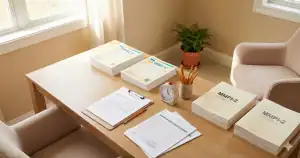
A psychoeducational evaluation is not a single test. It is a battery, chosen by the psychologist to answer the specific question a family is bringing. In our practice the standard comprehensive evaluation includes five domains.
Cognitive ability. Usually measured with the WISC-V, which produces a full-scale IQ along with five subscale indexes (verbal comprehension, visual spatial, fluid reasoning, working memory, processing speed). The subscale profile is often more informative than the overall number. A bright kid who scores in the 95th percentile on verbal comprehension but the 40th on processing speed is showing a profile that explains a lot of homeschool friction even before achievement data come in.
Academic achievement. Usually the WIAT-4, which measures reading (word reading, decoding, fluency, comprehension), written expression (spelling, sentence composition, written expression), and math (problem solving, numerical operations, fluency). Comparing achievement to cognitive ability is what allows the psychologist to identify a specific learning disorder under DSM-5-TR criteria when the discrepancy and the impact are real.
Executive function and attention. Measured through a mix of performance tasks (D-KEFS subtests, NEPSY-II attention and executive measures) and parent/teacher rating scales (BRIEF-2, Conners-4). For a homeschool family, the parent rating is often the most important single piece of data because the parent has been watching this kid execute multi-step tasks all day for years. The CDC’s ADHD diagnostic guidance describes the cross-setting evidence standard that makes parent observation load-bearing.
Social-emotional screening. Validated rating scales (BASC-3, CBCL, RCADS for anxiety and mood, ASRS for autism-spectrum profile when indicated) completed by parents and the child if age-appropriate. The point is not to diagnose every condition. The point is to make sure a learning concern is not actually an anxiety concern in disguise, or vice versa.
Clinical interview and observation. A structured conversation with the parents, a separate one with the child, and direct observation through the testing itself. The observation data are often what tie the test scores to the lived day.
The end product is a written report that translates all of the above into a clear answer to the family’s original question, with specific recommendations the family can actually act on.

When a Florida Homeschool Family Should Pursue One
Three patterns usually push a Florida homeschool family from “watching it” into “let’s get an evaluation.”
Pattern one: the gap. The kid is bright in conversation and struggling on the page. A 10-year-old who can explain the water cycle out loud at a co-op but cannot get a paragraph written about it has a gap that should be measured, not assumed. The same is true in the other direction: a kid who tests well but cannot apply what she knows in a real assignment is showing a different kind of gap.
Pattern two: the cluster. Attention complaints AND emotional dysregulation AND academic slowdown happening together, across more than one subject, for more than three months. Clusters are diagnostic in a way single complaints are not. The AAP clinical guideline for ADHD is explicit that ADHD identification requires cross-setting evidence of impairment, and a comprehensive evaluation is built to gather that evidence.
Pattern three: the planning question. The family is making a decision: stay in homeschool, return to a traditional school, switch curricula, apply to a co-op that requires placement data, or formalize accommodations under the FES-UA service plan. The evaluation gives the family real data to make the decision with instead of guessing.
For families with a twice-exceptional kid where the giftedness masks the struggle (or the struggle masks the giftedness), evaluation is the only reliable way to see both at once. Our page on support for twice-exceptional (2E) individuals describes how we approach those profiles.
How FES-UA and PEP Coverage Works for Homeschool Families
This is the part most Sarasota and Venice homeschool families do not know about until they ask. Florida’s FES-UA scholarship and the Personalized Education Program (PEP) are administered through Step Up for Students, and both can cover psychoeducational evaluation at Davenport Psychology in full when the family qualifies and the funds are available.
The eligibility rules are set by Florida statute and updated by the Florida Department of Education. The FES-UA program page and the Step Up for Students provider directory are the authoritative sources. The short version for most homeschool families:
- FES-UA is the scholarship for students with a documented disability, broadly defined under Florida law. Psychoeducational services from a licensed Florida psychologist are an approved use of funds in most cases.
- PEP is the program for students whose families want a personalized education plan, including homeschool families who want to pull from a broader set of approved providers.
- Davenport Psychology is an approved provider for both. Families apply through Step Up directly and select us as the provider for the evaluation.
- Cash-pay is also available for families who do not qualify, or who do not want to use scholarship funds.
We do not file insurance for evaluations. Florida cash-pay psychology practice is the model and FES-UA / PEP coverage stands in where it applies. That is the honest financial picture, no surprises.

What to Expect From the Process
The process starts with a free 15-minute call. The point of the call is to figure out whether an evaluation is actually the right next step or whether something less involved (a parent consultation, a targeted academic intervention, a referral to a different specialist) would be more useful. We say no to evaluations more often than families expect. Sometimes the question a family is bringing is not actually a question testing can answer, and we will tell you that.
If the evaluation IS the right next step, we walk the family through scheduling, paperwork, and what to bring. The testing itself happens across appointments at our Sarasota or Venice office. Parents complete rating scales at home. Once testing is complete, the psychologist scores and integrates everything, drafts the report, and meets with the family to go through the findings in a feedback session that is itself a piece of the work. The report is yours. You can share it with a tutor, a pediatrician, a co-op director, or a future evaluator. It is your record of the answer.
One thing I tell families on the intake call: by the time you are looking at evaluation, you already have most of the data. You have been watching this kid every day for years. We are not the source of the information. We are the second opinion on what to do with it.
That is the work.
A Note on What Comprehensive Means
Some families come to us after a partial evaluation somewhere else, often a school-based screening or an online checklist, and they have a score without a story. A score in isolation can be misleading. A kid scoring in the 30th percentile on a reading subtest could be showing a real reading disorder, or showing test fatigue at the end of a long battery, or showing anxiety about the testing situation itself, or showing that the subtest was a poor fit for their profile. A comprehensive evaluation integrates the score with the interview, the observation, the rating scales, and the parent’s report of what the daily reality actually looks like, and that integration is what makes a recommendation defensible.
This matters for homeschool families specifically because the typical school-based evaluation is built around the question “does this child qualify for services in a public-school setting?” That is a useful question, but it is not the question most homeschool parents are actually asking. The homeschool parent’s question is usually closer to “what does my child need next, and how do I deliver it inside the rhythm of our days?” Answering that question requires a report that translates the data into specific, doable recommendations for the home environment, not a generic IEP-style accommodations list.
How to Get Started
If your homeschool kid is showing patterns that have you wondering whether a comprehensive evaluation would help, the simplest next step is a free 15-minute call. You can book a call here or reach our intake at (941) 702-2457. Our homeschool family services page describes how we work with homeschool families specifically, our psychoeducational consultation page walks through the evaluation services in more detail, and our team methodology page explains how we approach assessment as a team.
By Charles R. Davenport, Psy.D., Licensed Psychologist · FL License PY7978 · PSYPACT 15371
Medically reviewed by Charles R. Davenport, Psy.D. on July 2, 2026
Last Updated July 2, 2026
This article was written by Dr. Davenport from his clinical experience and the cited research literature. Read more about how we write our articles.
Dr. Davenport sees patients at our Sarasota office and our Venice office.
Disclaimer: This article is for general educational purposes and is not clinical advice or a substitute for evaluation by a licensed psychologist. If you or your child needs an evaluation or therapy, schedule a free 15-minute consultation.
References
- American Educational Research Association, American Psychological Association, & National Council on Measurement in Education. Standards for Educational and Psychological Testing. https://www.apa.org/science/programs/testing/standards
- American Academy of Pediatrics. Bright Futures: Guidelines for Health Supervision of Infants, Children, and Adolescents. https://brightfutures.aap.org/
- American Academy of Pediatrics, Subcommittee on Children and Adolescents with ADHD. (2019). Clinical Practice Guideline for the Diagnosis, Evaluation, and Treatment of Attention-Deficit/Hyperactivity Disorder in Children and Adolescents. Pediatrics, 144(4). https://publications.aap.org/pediatrics/article/144/4/e20192528/81590/Clinical-Practice-Guideline-for-the-Diagnosis
- Centers for Disease Control and Prevention. ADHD Diagnosis. https://www.cdc.gov/adhd/diagnosis/index.html
- Florida Department of Education. Family Empowerment Scholarship for Students with Unique Abilities (FES-UA). https://www.fldoe.org/schools/school-choice/k-12-scholarship-programs/fes/
- Step Up for Students. Scholarship programs and approved providers. https://www.stepupforstudents.org/
- Pearson Assessments. Wechsler Intelligence Scale for Children, Fifth Edition (WISC-V). https://www.pearsonassessments.com/store/usassessments/en/Store/Professional-Assessments/Cognition-%26-Neuro/Gifted-%26-Talented/Wechsler-Intelligence-Scale-for-Children-%7C-Fifth-Edition-/p/100000771.html
- Pearson Assessments. Wechsler Individual Achievement Test, Fourth Edition (WIAT-4). https://www.pearsonassessments.com/en-us/Store/Professional-Assessments/Academic-Learning/Wechsler-Individual-Achievement-Test-%7C-Fourth-Edition/p/100002039
Get Professional Help from Licensed Psychologists
Our doctoral-level psychologists in Sarasota and Venice can help with your mental health needs.
Call (941) 702-2457 to schedule a consultation.