
Medically reviewed by Charles R. Davenport, Psy.D. on July 21, 2026
Last Updated July 21, 2026
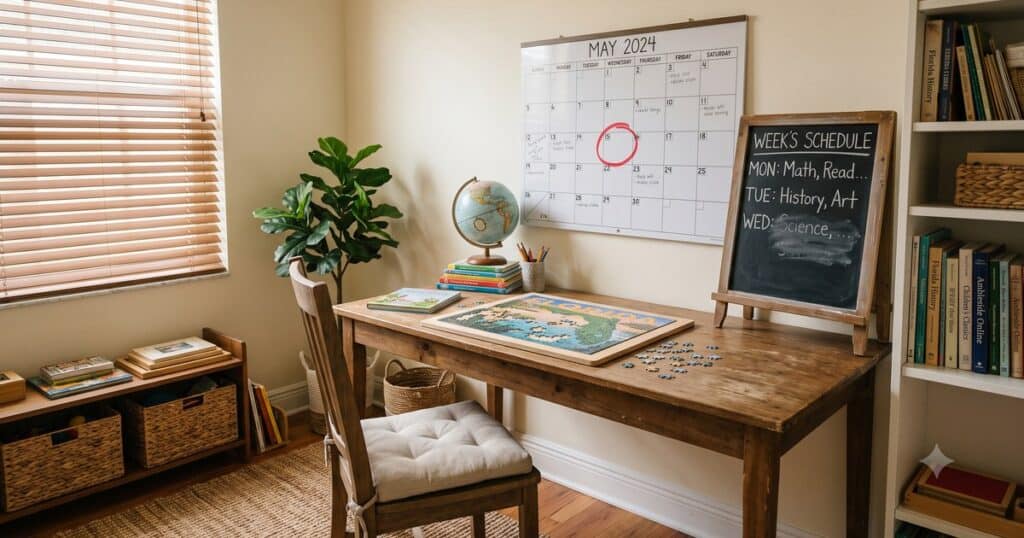
Anxiety in a homeschool kid rarely shows up in the middle of a calm math lesson. It shows up at the seam. The moment you switch from morning reading to afternoon writing. The Sunday night before co-op starts back up. The week a new baby comes home and the whole schedule reshuffles. Parents often tell our office that the kid is “fine at home” and then falls apart the second something changes, and they wonder if that means the anxiety is not real or is somehow the parent’s fault. Neither is true. Childhood anxiety around transitions is one of the most common patterns we see in homeschool families, and it has a specific shape that is different from the anxiety a classroom-schooled kid brings home. Research shows that anxiety disorders are among the most common mental health conditions in children, and that roughly 9 percent of children ages 3 to 17 have a diagnosed anxiety disorder in the United States (CDC Children’s Mental Health Data). The good news is that the treatments with the strongest evidence, particularly cognitive behavioral therapy, work well for this age group when they’re targeted at the actual pattern (Walkup et al., 2008, PMID 18974308).
Book a free 15-minute call with Dr. Davenport
Why Homeschool Transitions Have a Different Shape
A classroom-schooled kid gets 30 to 50 transitions a day whether they want them or not. Bell rings, line up, walk to specials, sit down, switch subjects, lunch, recess. Their nervous system builds a tolerance for switching because the environment demands it constantly. A homeschool kid, especially one whose parents have built the day intentionally around calm and low friction, often has fewer transitions per day. That is not a bug. It is one of the reasons families choose to homeschool. But it also means that when a transition DOES happen, the kid’s nervous system has less practice absorbing it.
The result is a kid who’s genuinely fine when the day is predictable and completely falls apart when the schedule shifts. Sunday night before co-op starts. The morning of a doctor’s appointment. The week you add a new subject. Parents read the meltdown as “she can’t handle change” and start avoiding schedule changes, which unfortunately teaches the anxiety that avoidance works, which strengthens the pattern. This is not a discipline failure. It’s a predictable feedback loop the anxiety literature has been mapping for decades (AACAP Practice Parameter for Anxiety Disorders, Connolly & Bernstein, 2007).
What Typical Transition Friction Looks Like
Some resistance to change is developmentally normal at every age. A four-year-old who cries when you swap the color of her cup is not showing anxiety. She’s showing four. A nine-year-old who groans when you say “put the book down, we’re starting writing” is showing nine. The friction gets short-lived, the child moves on within a few minutes, and the rest of the day is not shadowed by it. If your kid grumbles and gets over it in ten minutes, that’s friction. That’s not anxiety.
I want to be honest that I used to treat schedule changes as clinically neutral, as long as the child eventually cooperated. In the last few years I’ve come to weight the physical signs more heavily than the compliance outcome. A child who eventually sits down but does it with a pounding heart, sweaty palms, and a rigid jaw is a different clinical picture than a child who grumbles and shrugs. The compliance can look the same. The internal experience isn’t.
What the Anxiety Pattern Looks Like
Here are the signatures I ask homeschool parents about first when they bring a kid in for a consultation.
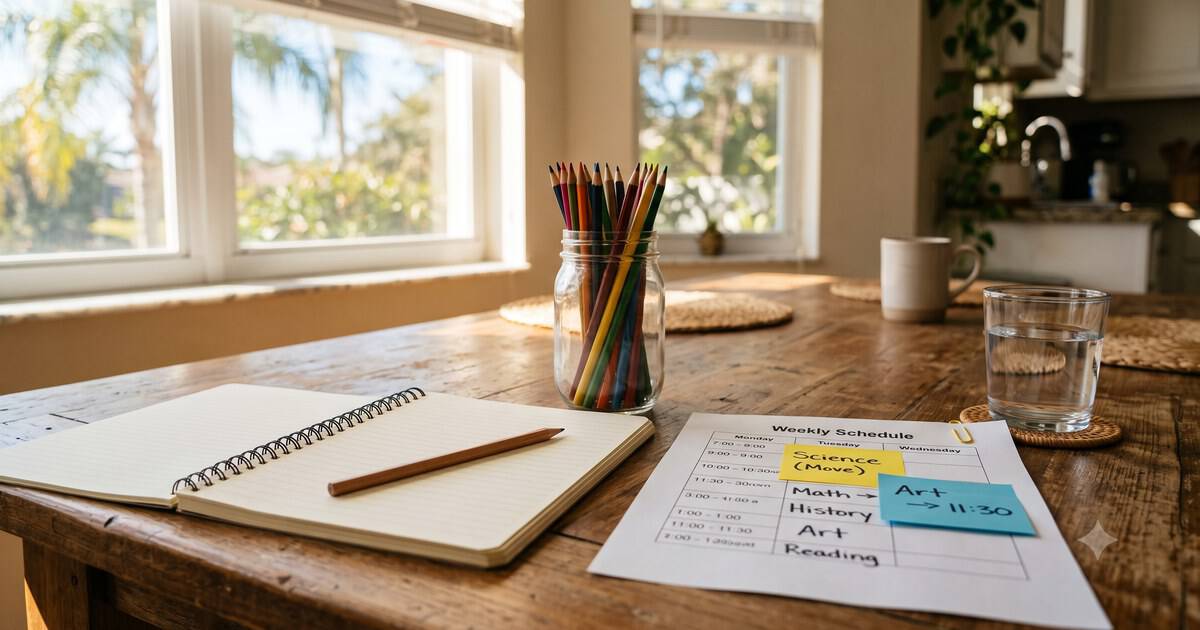
Anticipatory dread. The kid isn’t upset about the current activity. He’s upset about what comes NEXT. Sunday afternoons are ruined by Monday’s co-op. Wednesday’s reading is ruined by Thursday’s field trip. The anxiety lives in the future and eats the present. This is one of the most reliable markers of a clinical anxiety pattern rather than typical resistance.
Physical symptoms tied to the transition. Stomachaches on co-op mornings. Headaches before the piano teacher arrives. A sudden need to use the bathroom right when you say “OK, math time.” Parents often think the kid is faking to avoid the task. In my experience the physical symptoms are almost always real. The nervous system’s threat response includes gut motility, and a stressed nine-year-old feels genuine nausea.
Sleep disruption on the night before a change. Trouble falling asleep the night before co-op. Waking up multiple times before a family trip. The 5 AM eyes-open pattern before an appointment. The AAP notes that sleep changes are among the earliest and most consistent signs of childhood anxiety (AAP HealthyChildren.org: Anxiety and Depression in Children).
Reassurance-seeking loops. “Are you sure co-op is at 10?” “You promise we’re not going anywhere after?” “What if I don’t like the new book?” Answering these calms the child for about 45 seconds and then the question comes back. This is a hallmark of anxiety, not curiosity, and the answering-the-question strategy paradoxically strengthens the loop.
Avoidance that expands over time. First it’s co-op mornings. Then it’s any morning with an outside commitment. Then it’s the grocery store trip on Tuesday. Anxiety that spreads to swallow more of the child’s world is one of the strongest signals that professional evaluation makes sense.
There’s a sixth signature I’ve come to weight more heavily than I used to. The anxiety often looks like a rehearsal that never gets to happen. The child wants to walk through the whole day in her head before it starts, needs to know exactly who will be there, what they’ll do, in what order, and if any of it turns out different she doesn’t get to complete the rehearsal. That incomplete-rehearsal pattern is often what “she can’t handle change” actually is.
What Cognitive Behavioral Therapy Looks Like for Childhood Anxiety
The Child and Adolescent Anxiety Multimodal Study (CAMS) is the biggest randomized trial we have in childhood anxiety, and it showed that CBT alone, sertraline alone, and CBT combined with sertraline all outperformed placebo, with combination treatment giving the strongest response (Walkup et al., 2008, PMID 18974308). For most families we see, we begin with CBT and reserve the medication conversation for kids whose anxiety is severe enough to interfere with sleep, eating, or major daily activities.
CBT for a homeschool kid with transition anxiety looks concrete, not abstract. We identify the specific transitions that spike anxiety. We build a fear ladder that starts with mildly uncomfortable transitions and works up to the harder ones. We teach the child to notice the physical signals early, to name what her body is doing, and to run a short skill (paced breathing, grounding, a cognitive check) before the transition instead of during it. We coach the parent to hold the schedule change in place instead of accommodating around it, because accommodation is the fuel the anxiety runs on. Structured CBT-informed skills training for elementary-age children is one of the pathways the American Academy of Child and Adolescent Psychiatry Practice Parameter for anxiety disorders describes as evidence-based.
For a Sarasota or Venice homeschool family, a lot of the transition work can happen in the home where the transitions actually live. That’s a real advantage. The kid practices the co-op-morning routine at home before it’s high-stakes on Monday. The National Institute of Mental Health’s childhood anxiety resources describe the evidence base and treatment pathway in language most parents find useful.
When to Consider an Evaluation
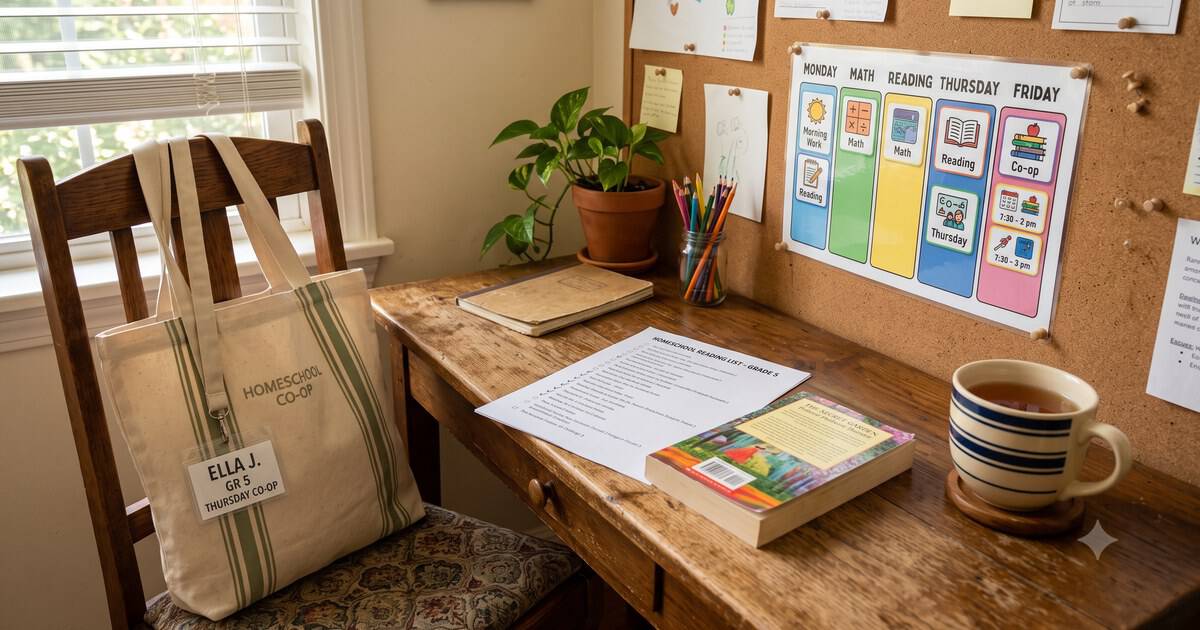
I’d think about a consultation if you can check three or more of the following.
- The physical symptoms (stomachaches, headaches, sleep disruption) are happening at least once a week.
- The pattern has been present for more than six weeks.
- The child’s world is getting smaller, not bigger. She’s opting out of activities she used to enjoy.
- Family life is now being organized around avoiding the trigger.
- The reassurance-seeking is running multiple times a day.
- Your gut says something is off.
Evaluation isn’t the same thing as immediately starting therapy. It’s a structured conversation about what pattern is actually happening and what would help most. Sometimes the answer is a short course of parent coaching. Sometimes it’s therapy for the child. Sometimes, when anxiety travels with attention or learning differences, it’s a broader psychoeducational consultation to sort out what’s driving what.
How to Get Started
If your homeschool day is being defined by the moments that break the routine, and you can’t tell whether it’s a phase, a temperament, or a pattern that would respond to treatment, we offer a free 15-minute call. You can book here or reach our intake at (941) 702-2457. Our homeschool family services page covers how we work with homeschool families specifically, our anxiety disorders page has more detail on how we approach childhood anxiety, and our team methodology page explains how we approach assessment.
By Charles R. Davenport, Psy.D., Licensed Psychologist · FL License PY7978 · PSYPACT 15371
Medically reviewed by Charles R. Davenport, Psy.D. on July 21, 2026
Last Updated July 21, 2026
This article was written by Dr. Davenport from his clinical experience and the cited research literature. Read more about how we write our articles.
Dr. Davenport sees patients at our Sarasota office and our Venice office.
> Disclaimer: This article is for general educational purposes and is not clinical advice or a substitute for evaluation by a licensed psychologist. If you or your child needs an evaluation or therapy, schedule a free 15-minute consultation.
> If in crisis: If your child is talking about wanting to die, hurting themselves, or is in immediate distress, contact the 988 Suicide and Crisis Lifeline by calling or texting 988, or go to your nearest emergency department. The 988 line is free, confidential, and available 24 hours a day.
References
- Walkup, J. T., Albano, A. M., Piacentini, J., et al. (2008). Cognitive behavioral therapy, sertraline, or a combination in childhood anxiety. New England Journal of Medicine, 359(26), 2753 to 2766. PMID 18974308. https://pubmed.ncbi.nlm.nih.gov/18974308/
- American Psychological Association. Anxiety Disorders in Children: What Parents Need to Know. https://www.apa.org/topics/anxiety/children
- Connolly, S. D., & Bernstein, G. A. (2007). Practice Parameter for the Assessment and Treatment of Children and Adolescents with Anxiety Disorders. American Academy of Child and Adolescent Psychiatry. https://www.aacap.org/App_Themes/AACAP/docs/practice_parameters/Anxiety_Disorders_Practice_Parameter.pdf
- American Academy of Pediatrics. HealthyChildren.org: Anxiety Disorders in Children. https://www.healthychildren.org/English/health-issues/conditions/emotional-problems/Pages/Anxiety-Disorders.aspx
- National Institute of Mental Health. Anxiety Disorders. https://www.nimh.nih.gov/health/topics/anxiety-disorders
- Centers for Disease Control and Prevention. Children’s Mental Health: Data and Statistics. https://www.cdc.gov/children-mental-health/data-research/index.html
- 988 Suicide and Crisis Lifeline. https://988lifeline.org/
Get Professional Help from Licensed Psychologists
Our doctoral-level psychologists in Sarasota and Venice can help with your mental health needs.
Call (941) 702-2457 to schedule a consultation.