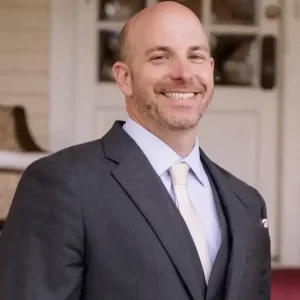

Medically reviewed by Charles R. Davenport, Psy.D. on July 16, 2026
Last Updated July 16, 2026
If you’re a Florida homeschool family and your child has a diagnosed disability or a documented condition that qualifies, the state’s Family Empowerment Scholarship for Students with Unique Abilities (FES-UA) can pay for psychoeducational evaluation at approved providers, including Davenport Psychology. (PEP, the Personalized Education Program, does not cover evaluation, consultation, or therapy under Step Up’s Specialized Services category — see the FAQ below for what PEP does and doesn’t fund.) Both programs are administered by Step Up for Students, a state-approved nonprofit scholarship-funding organization, and both operate through an Education Marketplace Account (EMA) that lets a parent purchase approved services directly, or reimburse themselves for approved out-of-pocket expenses, without a check ever leaving the parent’s account. The programs are separate but closely related, and the eligibility rules, service categories, and provider-selection steps are laid out in the Florida Department of Education’s official guidance (FLDOE FES-UA program page). This post walks through what FES-UA is, what PEP is, which families qualify, how to select Davenport Psychology as a provider once you’re funded, and which of our services are covered. It’s educational, not a sales pitch. If a family qualifies and the fit is right, we’re glad to help. If it isn’t, we’ll say so.
Book a free 15-minute call with Dr. Davenport
What FES-UA Actually Is
The Family Empowerment Scholarship for Students with Unique Abilities is Florida’s state-funded scholarship for students, ages 3 to 22, with a qualifying disability. It replaced the older Gardiner Scholarship in 2021 and is now administered under Florida Statute 1002.394 (Florida Legislature, 2024 statute text). Funding is deposited into a parent-controlled Education Marketplace Account and can be used for a defined list of approved education services, therapies, curriculum, and technology. Approved uses include psychoeducational evaluation, mental health counseling with a licensed provider, occupational and speech therapy, curriculum, and specialized instruction. The FLDOE’s FES-UA page (fldoe.org/schools/school-choice/k-12-scholarship-programs/fes/) is the definitive source for the current list of qualifying diagnoses and approved uses, and Step Up for Students maintains the parent-facing application and portal at stepupforstudents.org.
The qualifying diagnoses list is broad. It includes intellectual disability, autism spectrum disorder, Down syndrome, several genetic conditions, cerebral palsy, hearing and visual impairment, traumatic brain injury, and, importantly for the families we see most, high-risk 3 and 4 year olds and students with a documented educational need under specific statutory categories. Because the list has been updated several times since 2021, I always recommend parents confirm the current version directly at the FLDOE page rather than trusting older summaries.
What PEP Is and How It Differs
The Personalized Education Program (PEP) is a related but separate scholarship option that opened in 2023, expanding eligibility beyond students with disabilities to any Florida K-12 student whose family chooses to educate them outside a public or private school in a state-approved personalized model. PEP is not a “disability scholarship.” It’s a broader school-choice option that funds curriculum, tutoring, therapies, and approved educational services through the same Step Up EMA infrastructure that FES-UA uses (Step Up for Students PEP page).
The practical difference for a family that walks into our office:
- FES-UA requires a qualifying disability diagnosis and typically produces a larger annual scholarship award because it’s designed for higher-need students.
- PEP does not require a disability diagnosis and produces a smaller award, but is available to a much broader set of homeschool families.
Some families qualify for one and not the other. Some children start on PEP for general educational funding and transition to FES-UA after a psychoeducational evaluation documents a qualifying condition. FES-UA can cover our fees for the specific service categories the state has approved (evaluation, consultation, and therapy); PEP does not cover those categories at our practice.

Who Qualifies
Eligibility rules change from year to year, so the summary here is general and the official FLDOE page is authoritative. As of the 2025-2026 program cycle:
For FES-UA, the child must be a Florida resident, ages 3 to 22 (or through the school year they turn 22), and have a qualifying disability documented by an appropriate provider. The documentation requirement is the piece that often sends families to our practice first. If a child has been informally identified with a suspected condition but never formally evaluated, an evaluation is often the step that unlocks scholarship eligibility. That evaluation itself can be paid for by the scholarship once the child is funded, and can be paid out of pocket by a family whose child has not yet been diagnosed but is pursuing the scholarship.
For PEP, the child must be a Florida resident and K-12 eligible, and the family must commit to a personalized education plan that meets the state’s requirements. There’s no disability requirement for PEP.
Both programs require the parent to apply through Step Up for Students. The application windows open annually, and Step Up publishes deadlines and priority categories at stepupforstudents.org. Priority within FES-UA generally goes to renewals first, then to students with the highest-need categories, then to remaining eligible applicants in order of application date.
What Services Are Covered at Our Practice
The Florida Department of Education publishes an approved-use list that governs what a family can spend scholarship funds on. For a homeschool family working with our practice, the categories most families end up using are:
- Psychoeducational evaluation. A comprehensive workup that includes cognitive, achievement, attention, executive-function, and social-emotional testing. This is the entry-point service for most FES-UA families whose child does not yet have a formal diagnosis and for families who want to understand a homeschool learner’s specific profile. Full detail on our approach is on the psychological testing page.
- Psychoeducational consultation. A shorter, targeted engagement focused on interpreting existing records, translating a diagnosis into homeschool-friendly recommendations, and giving parents concrete next steps. Detail on the psychoeducational consultation page.
- Individual therapy for the child. Licensed clinical mental health services provided in-office at our Sarasota or Venice location, or via telehealth for families in PSYPACT-covered states.
- Parent consultation. Structured meetings focused on skill-building for the parent, especially around homeschool structure, autonomy support, and behavior management. This is a service many parents don’t realize is scholarship-eligible.
The approved-use list is maintained by FLDOE and Step Up, and it does change. Before every intake we confirm that the family’s specific plan for spending funds fits the current approved-use categories.
How to Select Davenport Psychology as a Provider
Once a family is funded, the process to use us as a provider is straightforward. It runs on the Step Up EMA portal. The general flow, subject to Step Up’s most current portal design:
- The parent logs into their Step Up EMA account at stepupforstudents.org.
- In the marketplace or provider-search area, the parent searches for Davenport Psychology by name, or by our tax ID if the portal requires it. We’re an approved FES-UA provider for the categories listed above. PEP does not fund these clinical service categories.
- The parent submits a service request or purchase order through the portal for the specific service category (evaluation, therapy, consultation).
- Once the purchase order is approved, we deliver the service and submit an invoice through the Step Up provider portal.
- Step Up releases funds from the family’s EMA to us directly. The parent doesn’t handle payment.
For services that Step Up funds via reimbursement rather than direct payment, the parent pays us at the time of service and then uploads the receipt and invoice to their EMA for reimbursement. Both mechanisms are common. Which one applies to a given service category is set by Step Up, not by us.
Most Sarasota and Venice families we see take a few days to a few weeks between applying to Step Up and getting a purchase order approved. Some families come to us before they’ve applied, and we help them understand what documentation they might need and what the scholarship could cover if approved. There’s no cost to that conversation, and we don’t need a scholarship approval to talk with a family about whether an evaluation makes sense.

What Parents Ask Most Often
“Does the scholarship cover the full cost of a psychoeducational evaluation?” Usually yes, if the family has the full annual award and hasn’t spent it on other approved categories. The annual FES-UA award varies by grade and disability category, and Step Up publishes the current award schedule. PEP does not cover evaluation, consultation, or therapy services under Step Up’s Specialized Services category, so PEP-funded families should expect to pay out of pocket for these services, or ask us about the path to FES-UA if a qualifying diagnosis is confirmed. We work with families on that math before we schedule.
“What if my child hasn’t been diagnosed yet?” Then the family typically pays out of pocket for the initial evaluation and, if the evaluation documents a qualifying condition, applies for FES-UA with that documentation. Some families prefer to pursue PEP first (which does not require a diagnosis) and then transition to FES-UA once a qualifying evaluation is completed. Both paths work.
“Can the scholarship cover therapy for the parent?” No. FES-UA and PEP fund services delivered to the enrolled student, not to the parent. Parent consultation focused on the child’s education and behavior support is a separate approved category and is billed against the student’s EMA.
“What if we move out of Florida?” Eligibility ends when residency ends. Families who move mid-year should contact Step Up for the specific handoff process.
When to Talk to Us
If you’re considering FES-UA or PEP, or if you’re already funded and shopping for a provider, we’re happy to have a 15-minute call to talk through fit. That call is genuinely just a conversation. There’s no commitment to schedule anything, and we’ll tell you honestly if we don’t think we’re the right provider for your child. You can book a call here or reach our intake at (941) 702-2457. Our homeschool family services page describes how we work with homeschool kids, and our team methodology page explains how we approach assessment.
By Charles R. Davenport, Psy.D., Licensed Psychologist · FL License PY7978 · PSYPACT 15371
Medically reviewed by Charles R. Davenport, Psy.D. on July 16, 2026
Last Updated July 16, 2026
This article was written by Dr. Davenport from his clinical experience and the cited state guidance. Read more about how we write our articles.
Dr. Davenport sees patients at our Sarasota office and our Venice office.
> Disclaimer: This article is for general educational purposes and is not clinical advice, legal advice, or a substitute for the official Florida Department of Education and Step Up for Students guidance. Program rules and approved-use categories change. Confirm current eligibility, awards, and approved uses directly with Step Up for Students and FLDOE before making financial decisions. If you or your child needs an evaluation or therapy, schedule a free 15-minute consultation.
> If in crisis: Contact the 988 Suicide and Crisis Lifeline or your nearest emergency department.
References
- Florida Department of Education. Family Empowerment Scholarship for Students with Unique Abilities (FES-UA). https://www.fldoe.org/schools/school-choice/k-12-scholarship-programs/fes/
- Step Up for Students. Family Empowerment Scholarship program overview. https://www.stepupforstudents.org/for-parents/family-empowerment-scholarship-for-students-with-unique-abilities/
- Step Up for Students. Personalized Education Program (PEP). https://www.stepupforstudents.org/for-parents/personalized-education-program/
- Florida Legislature. Florida Statute 1002.394, Family Empowerment Scholarship. http://www.leg.state.fl.us/Statutes/index.cfm?App_mode=Display_Statute&URL=1000-1099/1002/Sections/1002.394.html
- Florida Department of Education. School Choice programs overview. https://www.fldoe.org/schools/school-choice/
- Step Up for Students. How to apply and program timeline. https://www.stepupforstudents.org/for-parents/how-to-apply/
- Florida Department of Education. Home Education Program. https://www.fldoe.org/schools/school-choice/home-edu/
Families using FES-UA or PEP can apply scholarship funds to our five-Friday Skye Ranch Homeschool Program, which is listed on the Step Up Empowered Marketplace.
Get Professional Help from Licensed Psychologists
Our doctoral-level psychologists in Sarasota and Venice can help with your mental health needs.
Call (941) 702-2457 to schedule a consultation.